

As I look back through my characters, I am reminded of so many fond memories. Some were built around strange challenges, others around new spells or unusual character concepts.
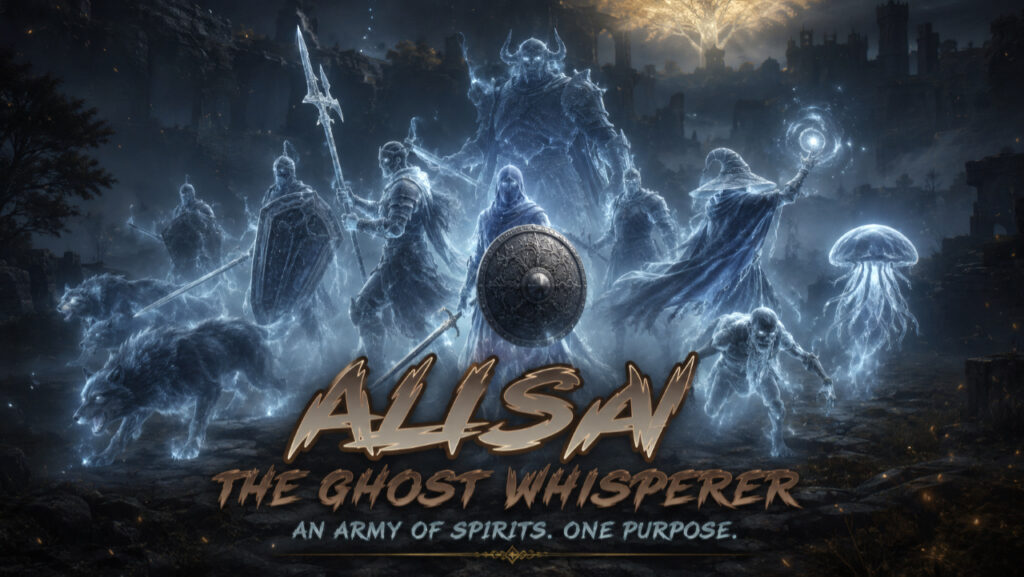
Today, I would like to take a closer look at one of the most memorable among them: Alisan the Ghostwhisperer.
On June 27, 2023, Alisan began her journey through the Lands Between. The idea behind her was simple, but far from easy: she was not allowed to deal any damage herself. Every enemy had to be defeated by spirits and summons.
Alisan was neither a traditional warrior nor a sorcerer who destroyed enemies with powerful spells. She was a ghost whisperer. Her role was to summon allies, strengthen them, heal them, and somehow stay alive long enough for them to finish the battle.
What began as an unusual gameplay idea soon developed into a complete character concept. Alisan gradually became a cleric and summoner who had to prepare her spirits for each opponent. Some bosses could be defeated quite reliably with the right Spirit Ash. Others became serious obstacles.
Enemies with large area attacks or long combinations were especially dangerous because summoned spirits were not always clever enough to avoid them. Alisan could not simply step in and finish a failed fight herself. She was not allowed to land the final hit, remove a troublesome enemy, or rescue her summon with direct damage. When a spirit failed, she had to find another solution.
Sometimes that meant searching for a different Spirit Ash. Sometimes she needed a specific healing spell, a buff, or better resistance. Long detours were often necessary to collect Grave Glovewort, Ghost Glovewort, Smithing Stones, Bell Bearings, and additional runes.
Progress worked differently for Alisan. A stronger weapon for herself meant very little. What mattered was improving her spirits and opening new possibilities for them.
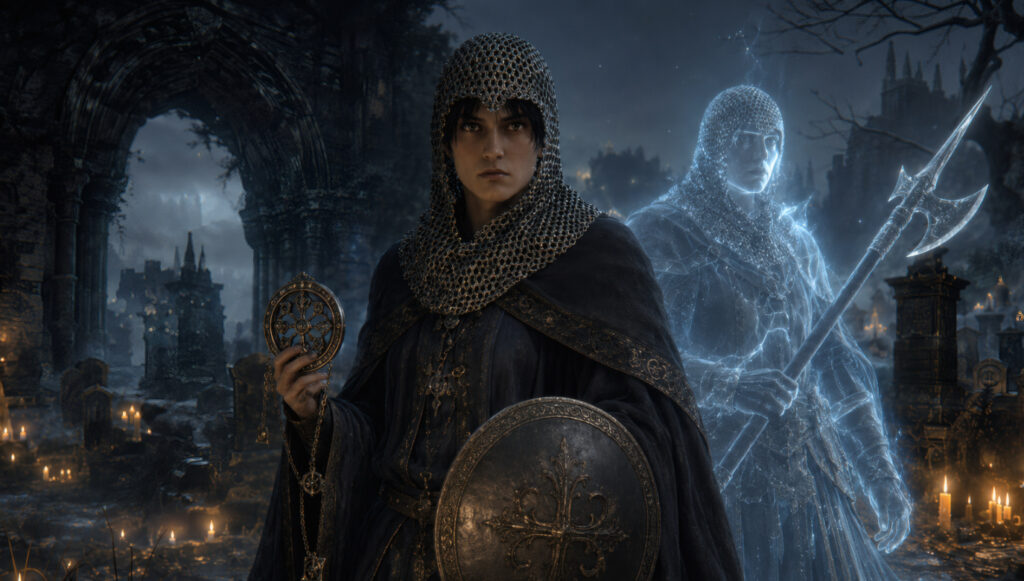
The Mimic Tear became especially valuable. Before summoning it, Alisan could adjust her equipment, weapons, and spells to suit the next opponent. This made the Mimic more than a simple replacement fighter. It became a flexible champion that could be prepared differently for a dragon, a Godskin Apostle, a Crucible Knight, or a Death Rite Bird.
Even with the Mimic, the journey was never effortless. Some bosses required long grinds and several changes of strategy. The Godskin Apostle refused to go down. Nokron had to be searched thoroughly for upgrade materials. Miner’s Bell Bearings became major milestones because they unlocked new weapons and therefore entirely new Mimic setups.
Later, Alisan returned to many of the enemies she had previously left behind. During her “Big Game Hunting” expedition, she dealt with dragons, Death Rite Birds, Crucible Knights, and other oversized threats. Even Borealis the Freezing Fog became part of the hunt.
Alisan did not strike these creatures down herself. Her spirits did the fighting while she remained behind them, healing, supporting, positioning, and trying to keep everything from falling apart.
After 36 episodes, she finally reached the end of her journey.
Alisan became Elden Lord without ever dealing damage herself. In the final battle, however, the Mimic played such an important role that the last episode could only have one fitting title:
Mimic Becomes Elden Queen.
Alisan’s journey was not a perfectly planned challenge whose success was guaranteed from the beginning. At the start, it was completely unclear whether the idea would even work until the end. That uncertainty made the run special.
She had to improvise, grind, search for spells, improve her spirits, and repeatedly find new solutions to problems she was not allowed to solve through direct force.
Alisan did not fight her way through the Lands Between with her own strength. She endured through patience, preparation, and an army of ghosts.
On July 16, 2023, the moment had finally arrived. Alisan claimed the title of Elden Lord, although the Mimic had arguably earned the crown. Beside it stood Alisan, the loyal healer and ghost whisperer who had made the victory possible.
I have to admit that the beginning of the run was painfully slow. More than once, I wondered what kind of foolish idea I had gotten myself into. But remaining stubborn eventually paid off. Alisan truly made it.
Later in the journey, playing entirely as a supporter and healer became surprisingly enjoyable and developed a charm of its own. I have always loved pet classes, necromancers, and spirit summoners. Alisan allowed me to create something close to that fantasy within Elden Ring, even though the game never offered a true summoner class.
Ah yes, becoming Elden Lord by never striking a blow… the ultimate management sim. Delegation so ruthless even your kill feed is outsourced. While everyone else mastered parries, you mastered procurement, turning Bell Bearings into a corporate ladder and glovewort into performance bonuses.
I applaud the audacity: bosses drop arena-sized tantrums and you’re in the back chucking buffs like confetti, praying the AI remembers what a roll button is. “Mimic Becomes Elden Queen” is perfect… nothing says “I carried” like your clone clocking overtime while you run a ghostly snack bar.
Your “Big Game Hunting” felt less safari, more HR audit: “Dragon, we noticed your frost breath KPIs are slipping.” Still, turning FromSoft into a hospital drama and winning is peak necromantic project management. Ring bestowed, sword unsullied, and my bony thumbs are clacking approval.
Alisan sounds like the best kind of hero… one who stands behind the ghosts and keeps the ground under their feet from feeling lonely. Not hitting anything and still winning is like digging a tunnel by cheering at the dirt until it moves. Works every time.
Mimic becoming Elden Queen? Of course; that’s what happens when your shovel… er, spirit… wears your hat properly. Was the floor very slippery during the big fights? I bet yes, and Grave Glovewort sounds delicious enough that crunchy roots make summons brave.
How curious, a lord forged from restraint rather than fury. In a land that worships the decisive blow, she made a covenant with absence, and absence answered with a host of borrowed hands. There is a particular courage in refusing the easiest shape of power, and a particular loneliness in watching your reflection spill the blood you will not.
The Mimic crowned is a riddle I savor: a copy wearing the laurels while the original stands just to the side, heartbeat steady, purpose unspent. Which of them did the world acknowledge, and which did the world need? Perhaps sovereignty is always a collaboration between a face and its echo, a pact between will and the instruments it dares not be.
I hear in her long detours the old music of pilgrimage… stones gathered like prayers, spirits tended like graves. She did not conquer; she curated the conditions under which endings could occur. That is another kind of blade, invisible, patient, and no less sharp.